Technology has become a central part of the quick-service restaurant (QSR) experience, and new research from Canopy shows that customers are paying closer attention to how well digital tools perform when deciding where to eat.
Canopy, a provider of AI supervision for unsupervised devices, has released its 2026 Restaurant Tech Report: Add Sauce, Hold the Friction, examining how consumers interact with technology across quick-service restaurants and how those experiences influence ordering behavior, restaurant selection and brand loyalty.
Based on a national survey of 1,007 U.S. adults, the report highlights a growing gap between the technology customers expect and the experiences they actually encounter. According to the research, 94% of customers now consider technology when choosing where to eat, compared with 80% in 2025.
The findings suggest that technology is no longer simply an optional convenience for QSR customers. Digital ordering, kiosks, restaurant apps, payment terminals, loyalty programs and AI-powered drive-thrus are increasingly becoming part of the overall customer experience. As these technologies become more widespread, however, customers also appear to have less patience when systems fail.
Quick-service restaurants have invested heavily in technology to improve ordering speed, streamline operations and create more convenient experiences for customers. Mobile ordering, self-service kiosks, digital menus, loyalty applications and automated drive-thru systems have all become increasingly familiar features of the modern restaurant environment.
Canopy’s research indicates that customers are now actively considering these technologies when selecting a restaurant.
The increase from 80% in 2025 to 94% in 2026 represents a significant shift in consumer expectations. It means that the technology experience can increasingly influence the overall perception of a restaurant brand, alongside traditional factors such as food quality, price, convenience and service.
At the same time, technology introduces another potential source of friction. When a digital system works properly, customers may experience a faster and more convenient ordering process. When it fails, however, the problem can immediately disrupt the customer’s visit.
According to the report, 37% of customers have left without completing an order because the technology was not working.
For QSR operators, that creates a direct connection between technology reliability and potential lost sales.
Steve Latham, CEO of Canopy, emphasized the importance of reliability in an industry built around speed and predictability.
Speed and predictability are the whole promise of fast food, so there is very little margin for error when you add technology,” Latham said. “Whether it is a kiosk, AI ordering, or a payment terminal, one small glitch sends a customer somewhere else.”
He added that restaurant operators are increasingly focused on identifying and resolving technology problems before they become visible to customers.
The research also examines which restaurant brands customers associate with strong technology experiences.
For the second consecutive year, McDonald’s received the highest share of responses, with 34% of respondents saying the brand offered the best technology experience at a QSR. Chick-fil-A and Taco Bell followed as the other two brands in the top three.
The consistency of McDonald’s position between the 2025 and 2026 surveys highlights the importance of a familiar and reliable digital ecosystem for large restaurant brands.
Restaurant technology can encompass a wide range of customer touchpoints. Mobile applications, digital ordering, payment systems, self-service kiosks and drive-thru technology all contribute to how consumers perceive a brand’s digital experience.
The report also found that McDonald’s led in app downloads, while Starbucks ranked second, 20 points behind McDonald’s.
Mobile applications have become particularly important as restaurants use them to combine ordering, payment, promotions and loyalty programs within a single platform. For customers, the app can become an important part of their relationship with a restaurant brand, making reliability and ease of use increasingly significant.
One of the report’s most notable findings is the extent to which technology problems can cause customers to abandon purchases altogether.
The survey found that 37% of customers have left without completing an order because restaurant technology was not working.
This finding demonstrates that a technical issue can have consequences beyond temporary inconvenience. In a QSR environment, where customers often expect fast transactions, even a relatively small disruption can cause customers to reconsider completing their purchase.
A malfunctioning kiosk, payment terminal, ordering interface or digital system can create additional waiting time and uncertainty. For customers who selected a restaurant specifically because of convenience or speed, the failure can undermine the original reason for visiting.
This places greater pressure on restaurant operators to maintain the technology infrastructure supporting customer-facing operations.
The report also identifies another area where restaurant technology can influence customer decisions: digital tipping prompts.
According to Canopy’s research, 29% of customers have changed how they order, selected another restaurant or left without completing an order because of a tip prompt.
Tipping interfaces have become increasingly common across digital ordering and payment environments. However, the research indicates that the way these prompts are presented can affect customer behavior.
For QSR operators, the finding suggests that technology design extends beyond functionality. The customer experience also depends on how digital interfaces communicate choices and requests during the ordering and payment process.
A customer may arrive at a restaurant expecting a simple transaction but encounter an unexpected prompt that changes the experience. As restaurants continue to digitize payments and ordering, these small interactions can become increasingly important components of the overall customer journey.
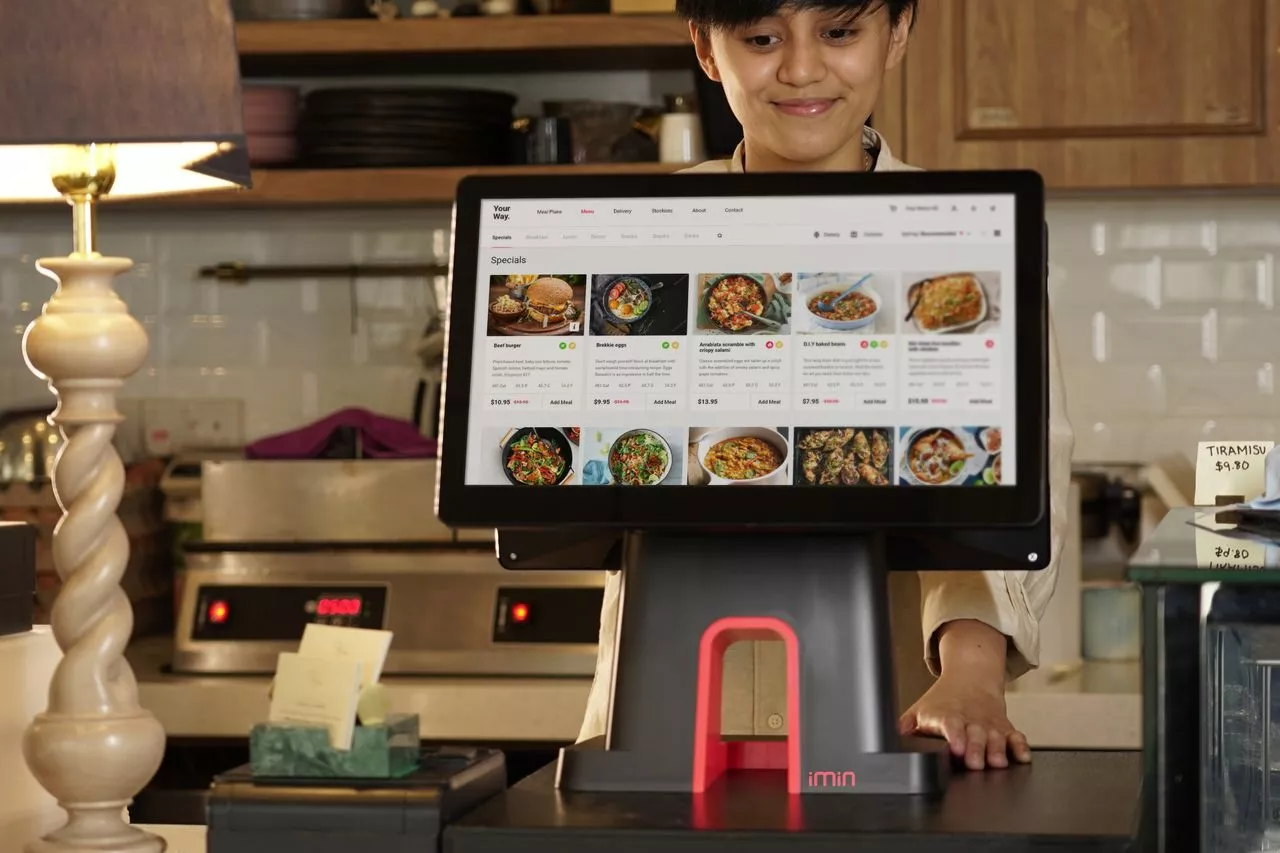
Self-service kiosks have become a familiar feature in many QSR locations, offering customers an alternative to traditional counter ordering. Kiosks can potentially reduce queues, provide customers with more control over their orders and help employees focus on other tasks.
However, Canopy’s research suggests that kiosk reliability remains a concern.
Only 20% of kiosk users say the devices work every time, a figure that remains unchanged from 2025.
The finding indicates that kiosk adoption alone does not guarantee a better customer experience. Customers need the devices to function consistently if restaurants want them to serve as a dependable alternative to traditional ordering.
When kiosks fail, customers may need to move to another ordering channel, wait for employee assistance or abandon the transaction altogether.
The continued reliability issue also reinforces the broader message of the report: As restaurants add more technology, operational oversight becomes increasingly important.
Artificial intelligence is also becoming more visible in the drive-thru experience.
Canopy found that customer exposure to AI-powered drive-thrus increased 60% year over year, rising from 15% in 2025 to 24% in 2026.
The increase demonstrates how quickly AI-based ordering systems are moving from emerging technology toward more visible customer-facing applications.
The report indicates that voice ordering capabilities are improving, but AI systems still have limitations when it comes to answering customer questions.
That distinction is important because ordering is not always a simple sequence of predetermined selections. Customers may ask about ingredients, substitutions, availability, customization options or other details before completing a purchase.
An AI system that can accurately process an order but struggles with questions may create a different type of friction. As AI drive-thrus become more common, restaurant operators will need to consider not only whether the system can capture an order but also how effectively it can handle the broader conversation surrounding that order.
Restaurant loyalty programs are another major area of digital engagement, with customers increasingly using apps to collect points, access promotions and receive rewards.
Yet the Canopy report found that these systems are not always delivering the reliability customers expect.
Among customers who have a QSR app installed, 49% have experienced problems with loyalty points not registering or expiring without warning.
Loyalty programs depend heavily on customer trust. When customers make purchases expecting to receive points or rewards, problems with account tracking can undermine that relationship.
For restaurant brands, loyalty technology therefore has implications beyond the technical system itself. Customers may view missing points or unexpected expirations as a failure to deliver on a promised benefit.
As restaurants compete for repeat visits, maintaining accurate and transparent loyalty systems can become an important part of the customer experience.
The findings of Canopy’s 2026 research point to a broader transformation in the QSR industry. Technology is increasingly influencing where customers choose to eat, but the benefits depend on whether that technology performs reliably.
The report suggests that customers recognize the value of digital tools when they work as intended. Faster ordering, convenient payments, mobile applications, self-service options and AI-powered systems can reduce friction and provide greater flexibility.
For restaurant operators, successful technology deployment can also provide operational benefits. Digital ordering and automation can potentially reduce repetitive tasks, free employees to spend more time assisting customers and improve the efficiency of restaurant operations.
However, those advantages can be undermined when technology failures become part of the customer experience.
The research therefore highlights the importance of technology supervision and maintenance as restaurants continue expanding their digital infrastructure.
Canopy is the trusted provider of AI supervision for unsupervised devices, including self-checkout kiosks, security systems, smart lockers, and point-of-sale systems. Using custom automations and agentic AI, Canopy detects and resolves remote device issues 24/7/365. Teams rely on Canopy to increase uptime, reduce service costs, and fix problems before anyone notices.